By Liam R. F. Bird

Public education in the United States is at a critical inflection point. As federal policies take a sharp turn under the Trump administration, state and local governments—especially in blue strongholds like Illinois—are grappling with how to resist harmful rollbacks while continuing to advance equity-driven reforms.
Chicago, the nation’s forth-largest school district, remains a case study in both the progress and challenges of urban education reform. Policies implemented during my tenure as Director of Racial Equity Initiatives at Chicago Public Schools (CPS)—such as the Equity Framework, Opportunity Index, and Culturally Responsive Education and Diversity (CRED) Policy—continue to shape how the district allocates resources, evaluates policies, and addresses system inequities and structural racialization. Yet, even as CPS leads in equity-based policymaking, it contends with ongoing issues like leadership turnover, historic school closures, and legal battles against discriminatory hiring practices.
At the state level, Illinois has taken important steps to push back against federal overreach. However, its Evidence-Based Funding (EBF) model continues to fall short in addressing opportunity differences predictable by socioeconomic indicators, leaving districts like CPS disproportionately underfunded. Meanwhile, immigration policies, culturally sustaining pedagogy mandates, and local district initiatives highlight a broader push for educational justice across the state.
This article examines the state of public education across three levels—federal, state, and local—fact-checking policy shifts, analyzing their impact, and offering a forward-looking perspective on what’s at stake for equity in Illinois schools.
PART I: Federal Policy Shifts Under the Trump Administration

1. The Push to Dismantle the U.S. Department of Education: The Trump administration has made no secret of its desire to eliminate the U.S. Department of Education entirely. Trump’s nominee for Secretary of Education, Linda McMahon, has been tasked with carrying out this agenda, promising to “return education to the states” and eliminate what she calls “bureaucratic overreach.” This is not a neutral policy shift. The elimination of the department would mean:
- Defunding Title I programs, which provide crucial resources for low-income districts.
- Removing federal oversight for civil rights protections, making it easier for states to roll back safeguards for Black, Latinx, immigrant, and LGBTQ+ students.
- Gutting enforcement of the Individuals with Disabilities Education Act (IDEA), leaving special education funding and services up to state discretion.
2. The Attack on DEI in Schools: The administration has issued an ultimatum: schools and universities must eliminate DEI programs within two weeks or risk losing federal funding. The directive includes banning:
- Race-conscious hiring and admissions policies.
- Culturally responsive curricula and teacher training.
- Student support programs designed to mitigate racial and socioeconomic opportunity differences.
This is an escalation of what we’ve seen before. Under No Child Left Behind, the federal government mandated high stakes testing while ignoring the structural inequities that created disparate outcomes in the first place. Under Race to the Top, states were incentivized to embrace charter schools under the guise of “innovation,” further defunding neighborhood schools. Now, the Trump administration is taking the next step—erasing DEI work entirely, while weaponizing federal funding to force compliance.
The chilling effect is already being felt. According to Democracy Now!, some institutions across the country are scrambling to assess their legal standing, with some preemptively dismantling DEI offices to avoid political and financial backlash.
For Illinois, the implications are clear:
- Chicago Public Schools’ (CPS) Culturally Responsive Education and Diversity Policy remains a model for resisting these changes. CPS has long led in implementing policies that protect educators and students from the erasure of race-conscious education.
- State protections for DEI remain in place, but the fight is far from over. Illinois has made progress in mandating culturally responsive teaching standards, but without federal backing, enforcement will be a challenge.
- Educators must be prepared for backlash. The administration’s framing of DEI as “racial preference” is designed to create division. The language of “reverse discrimination” has long been used to undermine equity efforts, and we are seeing that playbook deployed at the federal level.
3. School Privatization and the Expansion of Vouchers: The Trump administration is aggressively pushing school choice policies that prioritize:
- Massive federal investments in private and charter schools.
- The potential return of tax-credit scholarships, which would allow public funds to subsidize private school tuition.
- The removal of accountability measures for charter schools, making it easier for them to operate with little to no oversight.
This is a direct continuation of the neo-liberal education agenda that has dominated policy for decades. What started with NCLB and charter expansion is now evolving into a full-fledged assault on public education, with the Trump administration positioning vouchers and privatization as the only viable alternative.
For Illinois, this means:
- Chicago’s public schools could lose even more resources as funding shifts toward private and charter options.
- The return of the Invest in Kids Act is likely. This program, which allowed tax credits for private school tuition, was recently phased out—but state Republicans are already pushing for its revival, emboldened by federal policy shifts.
- Increased segregation. We know from past research that voucher programs do not improve educational outcomes—they simply shift resources to wealthier, whiter institutions while leaving public schools with less funding and greater challenges.
Resisting the Federal Rollbacks: The Role of State and Local Leadership
While the federal government’s power over education is limited, its ability to shape narratives, funding structures, and legal precedent is substantial. In Illinois, resistance will need to come from multiple fronts.
- State-Level Protections: Illinois Must Step Up: Governor J.B. Pritzker has positioned Illinois as a leader in progressive policy, but education funding remains deeply inequitable. Evidence-based funding is not enough—as The Education Trust has documented, Illinois continues to be one of the most regressive states in the nation when it comes to funding low-income, predominantly Black and Latinx districts. The state must:
- Increase its own investment in public education to counteract federal cuts. Strengthen legal protections for DEI work, ensuring that educators who teach race-conscious curricula are shielded from political attacks.
- Expand state oversight of privatization efforts, preventing public funds from being siphoned into unregulated private institutions.
- Local Action: How Cities Like Chicago Can Lead: Chicago has a history of resisting federal overreach, from its refusal to allow ICE to conduct immigration raids in schools to its recent decision to deny Secret Service access to public spaces. These acts of defiance set a precedent for how the city can protect education. Specifically, CPS and other districts must:
- Double down on culturally responsive education policies, embedding them into district-wide mandates that cannot be easily dismantled.
- Develop legal strategies for resisting federal funding threats. If the administration attempts to punish districts for upholding DEI, local governments must be prepared to litigate.
- Mobilize community-based education networks to ensure that students, parents, and educators are informed and ready to resist.
Conclusion: Education as a Site of Resistance
What we are witnessing is not just a policy shift—it is an ideological war against public education. The Trump administration’s moves to dismantle the Department of Education, eliminate DEI programs, and expand privatization are part of a broader strategy to gut the public sector and roll back racial justice efforts.
But we’ve been here before. No Child Left Behind, Race to the Top, and decades of neoliberal education reform have always used the language of “choice” and “accountability” to justify the defunding of public schools. This moment demands that we not only resist but also reimagine what education equity looks like at every level—federal, state, and local.
Illinois has an opportunity to lead the way in that fight. It will require bold action from policymakers, school districts, and communities alike. The question is not whether these attacks on education will continue—it is whether we will be ready to meet them with resistance, investment, and an unrelenting commitment to racial justice.
PART II: The State of Education: Illinois’ Resistance and Persistent Inequities

Illinois finds itself at a crossroads, caught between the threats of federal rollbacks under Trump’s administration and its own ongoing struggles with an inequitable funding system. While the state has taken significant steps to insulate public education from harmful federal policies—especially in areas of cultural responsiveness and immigrant protections—its school funding system remains one of the most inequitable in the nation. As a racial equity practitioner and education policy expert working directly with school districts across Illinois, I see both the gains and the shortcomings. This analysis unpacks where Illinois stands on education policy and where the most urgent work remains.
- School Funding: The EBF Model’s Broken Promise: The Evidence-Based Funding (EBF) model, introduced in 2017, was meant to create a more equitable distribution of state funding, prioritizing under-resourced districts. Yet, nearly a decade later, Illinois remains one of the worst states for school funding equity. Why?
- EBF Moves Too Slowly: While Governor J.B. Pritzker’s proposed $350 million increase for K-12 education in 2025 aligns with the EBF model, it falls short. At the current rate, it will take at least 20 more years to fully fund the state’s neediest schools. Meanwhile, generations of students are left behind.
- Structural Inequities Remain: According to The Education Trust, predominantly white districts in Illinois receive $2,200 more per student than districts serving primarily Black and Latinx students. This is due to local property taxes fueling school revenue, with wealthier (and whiter) communities able to generate significantly more funding.
- Chicago Public Schools is Penalized by the State: Despite being the largest school district in Illinois, CPS receives disproportionately less state aid than suburban districts. Unlike every other district in the state, CPS must fund its own teacher pensions, while the state covers pension costs for every other Illinois district. This systemic flaw further entrenches funding disparities between Chicago and its suburban counterparts.
Illinois’ Response: Will It Be Enough?
State legislators and advocates continue to push for more aggressive investment:
- Education advocates demand at least $750 million annually to close funding gaps faster and reduce the inequities embedded in EBF.
- Calls for pension reform to relieve CPS of its unfair financial burden have gained traction but remain politically fraught.
- Equity-centered policy proposals seek to restructure EBF so that funding is more aggressively weighted toward the highest-need districts, rather than protecting already adequately funded schools.
Without bold legislative action, EBF will continue to be a slow-motion failure for Illinois’ most underfunded schools.
- Immigration and Student Protections Amid Federal Interference: Under Trump’s new immigration policies, the “sensitive locations” rule—which previously barred ICE from conducting raids at schools, hospitals, and churches—has been revoked. This has sparked widespread fear among immigrant families and raised serious concerns about school safety and student protections.
How Illinois is Fighting Back
Illinois has reaffirmed its sanctuary status and is actively pursuing legislation to shield students from federal immigration enforcement:
- HB 3247 & SB 2065: Affirm students’ rights to public education regardless of immigration status and prevent schools from disclosing student immigration information.
- SB 2033 (Immigration Safe Zones Act): Would explicitly bar ICE from accessing schools, daycare centers, libraries, and state-run facilities.
- Chicago Public Schools (CPS) Training: CPS has expanded training for school staff on how to legally prevent ICE from entering schools and has partnered with advocacy organizations to provide legal support for families.
This resistance mirrors Chicago’s past defiance of federal overreach—such as when Mayor Brandon Johnson’s administration refused Secret Service access to CPS amid concerns about student protections.
However, the question remains: Will state-level protections be enough in the face of aggressive federal enforcement?
The Fight for Culturally Sustaining Pedagogy: Illinois is one of several states actively expanding culturally responsive education policies at a time when federal and conservative state governments are banning DEI, restricting curriculum, and removing books from schools.
New Legislative Efforts Include:
- HB 2997: Requires schools to teach Arab American history, ensuring representation in social studies curricula.
- SB 2270: Mandates Latino history education, addressing a long-standing gap in Illinois’ curriculum.
- HB 3198: Allows for disability history and culture to be taught in Illinois schools.
Illinois already leads the nation in mandating culturally responsive teaching standards and has signaled that it will continue to oppose federal efforts to erase DEI policies.
- The Illinois State Board of Education (ISBE) has recommended that all school districts create their own Culturally Sustaining Pedagogy (CSP) policies to protect educators and shield schools from federal interference.
- The CPS Culturally Responsive Education and Diversity Policy, which I worked on developing for four years during my tenure as Director of Racial Equity Initiatives, serves as a model for other districts in Illinois.
By formally embedding culturally sustaining practices into district policy, Illinois is insulating itself from the broader rollback of DEI efforts across the country.
Conclusion: Illinois is Fighting, But Can It Win?
Illinois is proving to be a state of contradictions:
- It is actively resisting federal education rollbacks—especially on DEI, immigrant protections, and inclusive curriculum.
- But its own education funding system remains fundamentally inequitable, with Black and Latinx students disproportionately attending the most underfunded schools.
The reality is this: Illinois cannot claim to be a leader in equity while simultaneously failing to fund its highest-need districts.
If state leaders are serious about protecting public education, they must:
- Double EBF investments to $750 million per year to close funding gaps within the next decade—not the next generation.
- Pass pension reform to level the playing field for Chicago Public Schools.
- Continue insulating Illinois schools from federal interference by strengthening state-level protections on immigration, DEI, and curriculum policy.
Without action, Illinois will be left defending progressive values in rhetoric while failing to deliver in practice. The time for half-measures has passed. Equity demands urgency.
The State of Education: Chicago, Illinois, and the Federal Landscape

As a Chicagoan and an education policy practitioner who advises school districts across Illinois, my focus remains on the intersection of equity, policy, and practice—particularly in urban school districts like Chicago Public Schools (CPS). While CPS provides a compelling case study for equity-driven reforms, it is also important to analyze broader trends across Illinois and understand how state and federal shifts impact districts statewide.
Chicago Public Schools: A National Leader in Equity Policy
While conservative critics often paint urban school districts as failing, CPS has emerged as a leader in implementing equity-focused policies. Many of these efforts have continued to flourish even as the district has navigated leadership transitions and political shifts at the state and federal levels.
- The Equity Framework and Opportunity Index: CPS’ Equity Framework—developed during my tenure as Director of Racial Equity Initiatives—serves as the foundation for embedding equity in all aspects of district decision-making. One of its most impactful tools is the Opportunity Index, which ensures that resources, programs, and support are allocated based on community need rather than a one-size-fits-all funding model. This approach prioritizes historically most impacted students and neighborhoods, countering Illinois’ inequitable school funding formula.
- School Board Policy Review: Equity at the Center: One of the most critical developments in CPS governance is the new Board Rule, Section 2-6, requiring that all new policies undergo an Equity Review before they can be passed by the Board of Education. This ensures that policy changes—whether related to discipline, curriculum, or budgeting—are examined through an equity lens. However, as CPS transitions to a hybrid-appointed and eventually fully elected school board, the sustainability of this requirement remains a key question.
- School Renaming and Cultural Responsiveness: CPS has implemented two groundbreaking policies in recent years:
- The Naming or Renaming of Schools Policy, which ensures that school names reflect the district’s diverse communities, leading to renamings that honor Black, Latinx, and Indigenous leaders.
- The Culturally Responsive Education and Diversity (CRED) Policy, which formalizes CPS’ commitment to anti-racist curriculum and culturally sustaining pedagogy. This policy has driven changes in classroom materials, professional development, and instructional practices.
- Addressing Racism and Discrimination in Schools: CPS has taken steps to address racism, Islamophobia, transphobia, and anti-Blackness in schools, though challenges persist. The termination of the principal at Jones College Prep (though delayed) following white nationalist incidents underscored the district’s stance against racial discrimination. Meanwhile, recent high-profile legal battles—including those led by attorney Ben Crump on behalf of Black CPS principals—highlight ongoing systemic barriers that disproportionately impact Black school leaders.
- Combating School Closures and the Push for Community-Led Adaptive Reuse: A significant equity challenge remains: the fate of CPS’ 72 vacant school buildings—most of which impact Black communities. The 2013 mass closures disproportionately harmed Black students, and while CPS has made strides in equitable investment, many of these shuttered buildings remain underutilized. Through community co-design efforts, the district has sought to repurpose these sites in ways that serve neighborhood needs rather than fueling further displacement.
Beyond Chicago: Equity and Policy Trends Across Illinois
While CPS leads in many areas, other districts across Illinois are implementing innovative policies to promote equity and respond to state and federal shifts.
Illinois’ Culturally Sustaining Curriculum Mandates
- The Inclusive History Law requires K-12 schools to include Black, Indigenous, and Latinx history in social studies curricula.
- The Teaching Equitable Asian American Community History (TEAACH) Act mandates the teaching of Asian American history, including the role of Asian immigrants in shaping Illinois.
- Recent legislation now requires instruction on Arab American and Latino history, reinforcing Illinois’ commitment to counteracting national efforts to erase marginalized histories from classrooms.
School Funding Inequities Under Evidence-Based Funding (EBF): Despite the adoption of the Evidence-Based Funding (EBF) formula in 2017, Illinois remains one of the worst states for school funding equity. The Education Trust reports that low-income Black and Latinx districts continue to receive significantly less funding per student than majority-white districts. CPS remains among the most underfunded urban districts in the nation when accounting for pension obligations.
Immigration and Student Protections: With federal policies under Trump once again targeting immigrant communities, Illinois has taken steps to shield students from harmful enforcement actions. Pending legislation includes:
- HB 3247 and SB 2065: Affirm the right to a free public education regardless of citizenship status and prohibit schools from disclosing immigration status.
- SB 2033 (Immigration Safe Zones Act): Would prohibit ICE from accessing schools, daycare centers, public libraries, and other state-run facilities.
- State-Level Equity Measures: The Illinois State Board of Education (ISBE) has introduced the Equity Journey Continuum, a tool that allows districts to track progress on eliminating opportunity gaps. Additionally, higher education institutions are now required to develop equity plans that address disparities in access, completion rates, and student loan debt among underrepresented student groups.
- Local Innovation in Equity Policy: While Chicago remains at the forefront, suburban and rural districts are also making notable strides. Examples include:
- Evanston/Skokie School District 65: Implemented a reparations-based approach to school funding, prioritizing resources for Black students.
- Peoria Public Schools: Developed a district-wide racial equity task force to review hiring practices and curriculum.
- Springfield Public Schools: Launched a community-driven initiative to address disproportionate discipline rates among Black students.
Looking Ahead: The Fight for Educational Equity in Illinois
As federal, state, and local policies evolve, the need for strong, equity-centered leadership in Illinois’ schools has never been more urgent. Chicago has set a powerful precedent through its policies, but sustaining these efforts in the face of leadership turnover and political shifts will require continued advocacy, research, and community engagement.
In a national context where public education is under attack, Illinois has an opportunity to lead—not just in resisting harmful federal policies, but in creating a model for what truly equitable education can look like. The work is ongoing, but as history has shown, meaningful change in public education starts with those who are willing to challenge the status quo.
Conclusion: The Fight for Educational Justice Continues
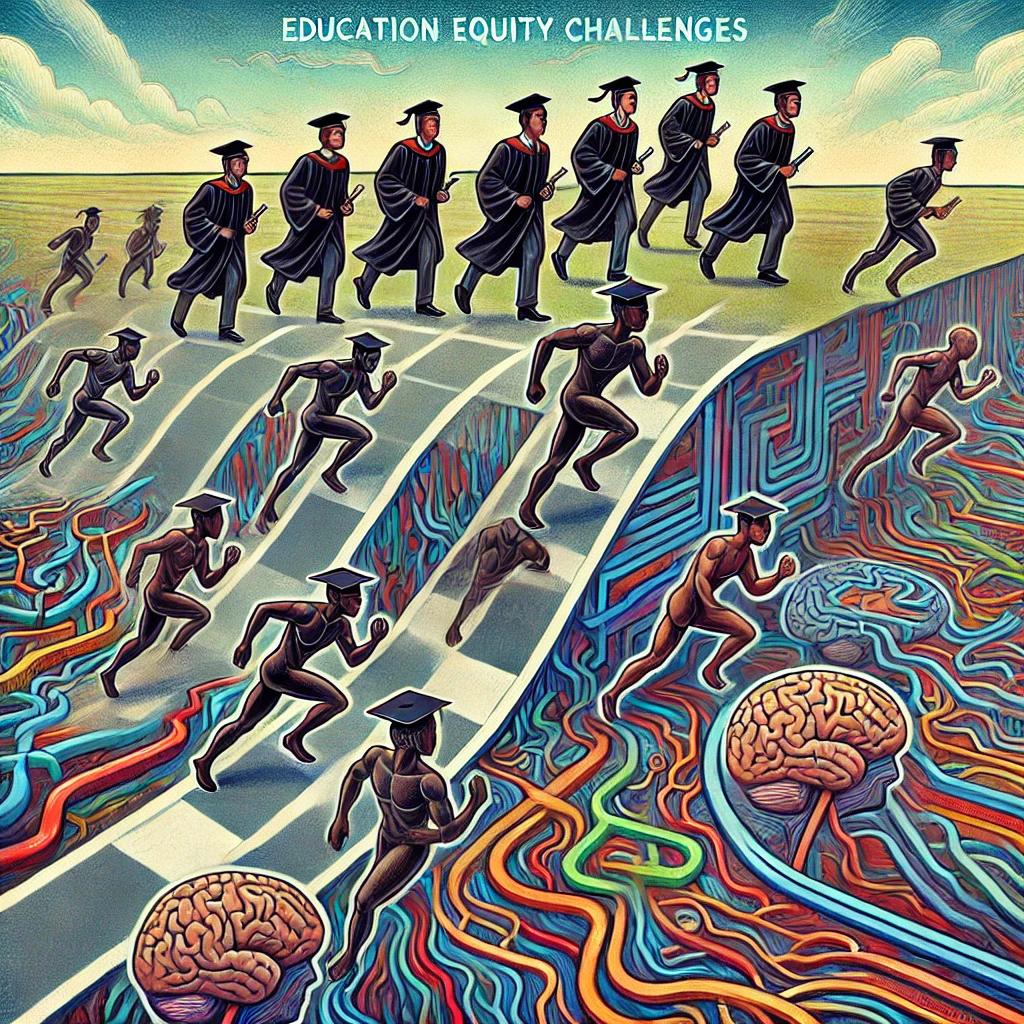
Public education in the U.S. has always been shaped by competing political ideologies, but today’s landscape is uniquely fraught with high-stakes battles over funding, curriculum, and the rights of students and educators. The Trump administration’s latest policies, from defunding DEI initiatives to rolling back Title IX protections and expanding privatization efforts, threaten to widen existing opportunity gaps. While some federal changes may have limited reach in districts with strong local protections, the risk of long-term erosion in equity-centered education remains real.
Illinois is resisting these threats in key ways—through legislation protecting immigrant students, culturally responsive curriculum mandates, and ongoing efforts to track and address educational inequities. However, the state’s Evidence-Based Funding model remains structurally inequitable, continuing to disadvantage Black and Latinx districts, including CPS. Without more aggressive funding reform, Illinois’ commitment to equity will remain incomplete.
At the local level, CPS serves as both a national model and a cautionary tale. Its policies on equity-driven resource allocation, community-led school renaming, and student-led policymaking demonstrate what is possible when a district prioritizes racial and social justice. Yet, issues like school closures, executive turnover, and ongoing struggles against anti-Black employment practices underscore the continued need for vigilance and advocacy.
The future of public education in Illinois—and across the nation—will be defined by whether policymakers, educators, and communities are willing to stand firm in the face of federal rollbacks and funding shortfalls. Chicago has provided a blueprint for equity-focused reforms, but sustaining this momentum requires ongoing commitment, particularly as the city transitions to an elected school board.
The fight for equitable public education has never been just about policy—it’s about power. Those who seek to dismantle public schools understand that education is a battleground for shaping the future. For those of us committed to justice, the path forward is clear: we must continue to challenge inequitable systems, uplift community-driven solutions, and hold leaders at every level accountable to the principles of equity, access, and belonging. The work is ongoing, but so is our resolve.
 LRFB Equity Consulting, LLC
Leave a comment